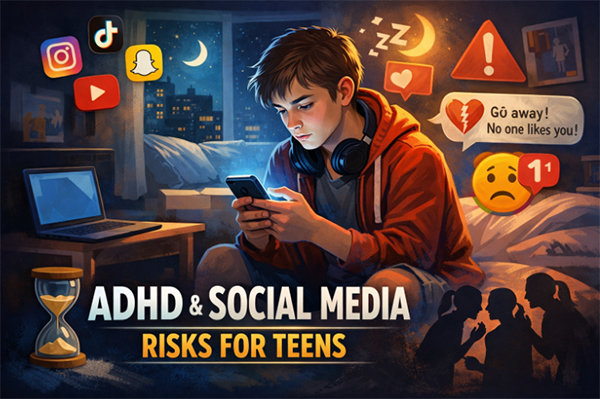
Social media is deeply embedded in teenage life. From TikTok and Instagram to Snapchat and YouTube, teens spend hours each day scrolling, posting, and interacting online. While social platforms can offer connection and creativity, they may pose unique challenges for adolescents with Attention-Deficit/Hyperactivity Disorder (ADHD).
As a psychiatrist in Boca Raton who works closely with adolescents and families, it’s increasingly common to see how excessive or unregulated social media use can worsen ADHD symptoms and impact emotional well-being.
Why Teens With ADHD Are More Vulnerable to Social Media
ADHD affects executive functioning, impulse control, emotional regulation, and attention span. Social media platforms are intentionally designed to capture and hold attention through fast-paced content, notifications, and variable rewards — features that can be especially difficult for teens with ADHD to manage.
Key traits that increase vulnerability include:
- Impulsivity: Teens with ADHD may post without thinking, overshare, or engage in risky online behavior.
- Difficulty with self-regulation: Endless scrolling can override internal cues to stop or take breaks.
- Heightened reward sensitivity: Likes, comments, and views provide instant dopamine hits that reinforce compulsive use.
- Challenges with emotional control: Online criticism or comparison may trigger strong emotional reactions.
Over time, these patterns can contribute to worsening symptoms rather than relief.
Common Risks of Social Media for Teens With ADHD
1. Increased Inattention and Reduced Focus
Frequent notifications and short-form content can make sustained attention even harder. Teens may struggle to focus on homework, conversations, or offline activities after prolonged screen time.
2. Sleep Disruption
Many teens use social media late into the night. Blue light exposure and mental stimulation interfere with sleep onset, which is especially problematic since sleep deprivation can significantly worsen ADHD symptoms such as irritability, impulsivity, and poor concentration.
3. Emotional Dysregulation
Social comparison, cyberbullying, or feeling left out can intensify anxiety, low self-esteem, and mood swings. Teens with ADHD may react more intensely to perceived rejection or negative feedback online.
4. Increased Risk of Anxiety and Depression
Research has shown a link between excessive social media use and higher rates of anxiety and depressive symptoms, particularly in adolescents who already struggle with emotional regulation.
5. Risk-Taking and Online Safety Concerns
Impulsivity may lead to unsafe interactions, inappropriate sharing, or difficulty recognizing online boundaries.
Can Social Media Ever Be Helpful?
Social media is not inherently harmful. When used mindfully and in moderation, it can offer benefits such as:
- Peer connection and social support
- Creative expression
- ADHD-related communities that reduce feelings of isolation
- Educational content and coping strategies
The key is structured, intentional use, rather than unrestricted access.
Healthy Social Media Strategies for Teens With ADHD
A psychiatrist in Boca Raton often recommends individualized strategies based on a teen’s symptoms, maturity, and mental health needs. Helpful approaches may include:
- Setting clear time limits using parental controls or app timers
- Encouraging screen-free routines, especially before bedtime
- Prioritizing offline activities such as sports, hobbies, and in-person social time
- Teaching emotional awareness around how social media makes them feel
- Modeling healthy digital behavior as parents and caregivers
In some cases, behavioral therapy or medication adjustments may also help improve self-regulation and attention.
When to Seek Professional Support
If social media use is leading to declining academic performance, emotional distress, sleep problems, or increased impulsivity, it may be time to consult a mental health professional. Early intervention can help prevent long-term patterns from forming.
A comprehensive evaluation by a psychiatrist in Boca Raton can determine whether ADHD symptoms are being exacerbated by digital habits and guide families toward appropriate treatment and boundaries.
Frequently Asked Questions (FAQs)
Does social media worsen ADHD symptoms?
Yes, excessive or unstructured social media use can worsen inattention, impulsivity, emotional regulation difficulties, and sleep issues in teens with ADHD.
How much screen time is appropriate for teens with ADHD?
There is no universal number, but many mental health professionals recommend consistent limits, screen-free times (especially before bed), and regular monitoring of emotional and behavioral changes.
Can social media cause ADHD?
No. Social media does not cause ADHD, which is a neurodevelopmental condition. However, it can amplify existing symptoms and make them harder to manage.
Should parents completely ban social media?
Complete bans are often unrealistic and may increase conflict. Guided use, clear boundaries, and open communication are typically more effective.
When should I contact a psychiatrist?
If your teen’s mood, behavior, sleep, or school performance worsens and does not improve with limits alone, consulting a psychiatrist is recommended.
About the Doctor
Dr. Priti Kothari is a board-certified child, adolescent, and adult psychiatrist providing comprehensive mental health care in Boca Raton. She specializes in the diagnosis and treatment of ADHD, anxiety, mood disorders, and adolescent behavioral concerns. Dr. Kothari takes a thoughtful, individualized approach, helping teens and families develop balanced strategies that support emotional health, academic success, and healthy technology use.
If you are concerned about your teen’s ADHD symptoms and social media habits, working with an experienced psychiatrist in Boca Raton can provide clarity, support, and effective treatment options.
References
- Twenge, J. M., et al. (2018).
Increases in depressive symptoms, suicide-related outcomes, and suicide rates among U.S. adolescents after 2010 and links to increased new media screen time.
Clinical Psychological Science.
https://journals.sagepub.com/doi/10.1177/2167702617723376 - Ra, C. K., et al. (2018).
Association of digital media use with subsequent symptoms of attention-deficit/hyperactivity disorder among adolescents.
JAMA.
https://jamanetwork.com/journals/jama/fullarticle/2687861 - American Academy of Pediatrics (AAP).
Media and Children Communication Toolkit.
https://www.aap.org/en/patient-care/media-and-children/ - National Institute of Mental Health (NIMH).
Attention-Deficit/Hyperactivity Disorder in Children and Teens.
https://www.nimh.nih.gov/health/topics/attention-deficit-hyperactivity-disorder-adhd - Twenge, J. M., & Campbell, W. K. (2019).
Media use is linked to lower psychological well-being: Evidence from three datasets.
Psychiatric Quarterly.
https://link.springer.com/article/10.1007/s11126-019-09630-7 - Sleep Foundation.
How Screen Time Affects Teen Sleep.
https://www.sleepfoundation.org/children-and-sleep/screen-time-and-sleep