Parents often wonder:
“Is my child just energetic… or could this be ADHD?”
“Is my child too young for a diagnosis?”
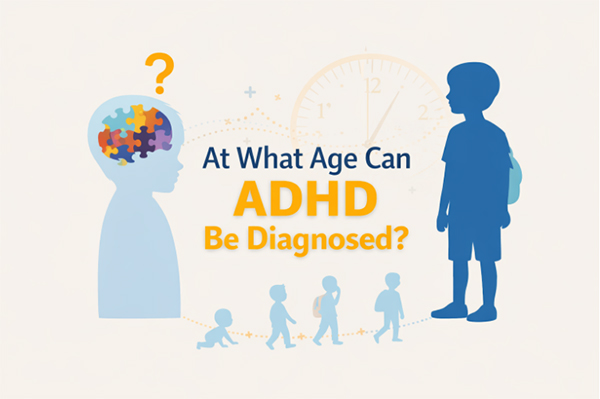
Attention-Deficit/Hyperactivity Disorder (ADHD) is one of the most common neurodevelopmental conditions in children. But one of the biggest questions families ask is: At what age can ADHD actually be diagnosed?
As a child psychiatrist in Boca Raton, Dr. Priti Kothari helps families understand when symptoms are developmentally typical — and when they may signal something more.
The Short Answer: ADHD Can Be Diagnosed as Early as Age 4
According to the American Academy of Pediatrics (AAP), ADHD can be reliably diagnosed in children as young as 4 years old.
However, diagnosis depends on several important factors:
- Symptoms must be present for at least 6 months
- Symptoms must appear in more than one setting (home and school, for example)
- Behaviors must be inconsistent with developmental level
- Symptoms must significantly impact functioning
Many children show hyperactivity or short attention spans in preschool years. The key difference is severity, consistency, and impairment.
Why ADHD Is Rarely Diagnosed in Toddlers
Toddlers naturally:
- Have short attention spans
- Struggle with impulse control
- Are physically active
- Have emotional outbursts
Because these behaviors are developmentally normal at ages 2–3, diagnosing ADHD at this stage is extremely difficult and usually not appropriate.
A skilled child psychiatrist evaluates whether behaviors are:
- More intense than peers
- Persistent across environments
- Causing clear social or academic difficulty
ADHD in Preschoolers (Ages 4–5)
At this age, signs may include:
- Constant motion beyond peers
- Inability to participate in structured activities
- Severe impulsivity
- Frequent injuries due to risk-taking
- Difficulty following simple instructions
In preschool-aged children, behavioral therapy is typically the first-line treatment, not medication.
Early intervention can significantly improve long-term outcomes.
ADHD in Elementary School Children (Ages 6–12)
This is when ADHD is most commonly diagnosed.
Why?
School demands increase:
- Sitting still for longer periods
- Completing assignments independently
- Following multi-step instructions
- Organizing materials
Children with ADHD may struggle with:
- Forgetfulness
- Disorganization
- Careless mistakes
- Interrupting others
- Emotional frustration
Teachers often notice symptoms first.
Can ADHD Be Diagnosed in Teens?
Yes.
Some children, especially those with Inattentive-Type ADHD—are not diagnosed until middle school or high school.
Signs in teens may include:
- Chronic procrastination
- Academic underperformance despite intelligence
- Emotional sensitivity
- Difficulty managing time
- Increased anxiety or low self-esteem
Undiagnosed ADHD in adolescents can increase risks for:
- Depression
- Academic failure
- Risk-taking behaviors
What If My Child Is “Borderline”?
Some children show traits but don’t fully meet criteria.
In these cases, monitoring, school accommodations, behavioral strategies, and parent guidance may be recommended.
A comprehensive psychiatric evaluation looks at:
- Developmental history
- Family history
- School reports
- Behavioral observations
- Emotional functioning
ADHD is never diagnosed based on a quick checklist alone.
Why Early Diagnosis Matters
When ADHD is identified early:
- Academic struggles can be reduced
- Self-esteem is protected
- Behavioral patterns improve
- Family stress decreases
- Long-term outcomes improve
Without support, children may internalize messages like:
“I’m lazy.”
“I’m bad.”
“I’m not smart.”
ADHD is not a character flaw — it is a neurodevelopmental condition.
When Should Parents See a Child Psychiatrist?
You may consider scheduling an evaluation if:
- Your child’s teacher repeatedly raises concerns
- Homework leads to daily conflict
- Emotional outbursts are extreme
- Your child struggles socially
- You feel unsure whether behaviors are typical
If you’re searching for a child psychiatrist in Boca Raton, early guidance can provide clarity and peace of mind.
About Dr. Priti Kothari
Dr. Priti Kothari is a compassionate and experienced child psychiatrist serving families in Boca Raton and surrounding areas. She specializes in evaluating and treating ADHD, anxiety, mood disorders, and behavioral challenges in children and adolescents.
Her approach is individualized, collaborative, and focused on supporting both children and parents through every step of care.
Frequently Asked Questions
Can ADHD be diagnosed before age 4?
In most cases, no. Behaviors in toddlers are often developmentally appropriate and difficult to differentiate from ADHD.
Is it too early to evaluate my 5-year-old?
No. If symptoms are severe and persistent, early evaluation can be helpful.
Does diagnosing ADHD early mean my child will need medication?
Not necessarily. For preschoolers, behavioral therapy is typically recommended first.
Can ADHD be misdiagnosed?
Yes. Anxiety, trauma, learning disabilities, sleep problems, and mood disorders can sometimes mimic ADHD. A thorough psychiatric evaluation is essential.
Can children outgrow ADHD?
Some symptoms improve with age, but many individuals continue to experience ADHD into adolescence and adulthood.
Medical References
- American Academy of Pediatrics (2019). Clinical Practice Guideline for the Diagnosis, Evaluation, and Treatment of ADHD.
https://publications.aap.org/pediatrics/article/144/4/e20192528/38481 - CDC – ADHD Diagnosis Guidelines
https://www.cdc.gov/ncbddd/adhd/diagnosis.html - American Psychiatric Association – DSM-5-TR Criteria
- National Institute of Mental Health – ADHD Overview
https://www.nimh.nih.gov/health/topics/attention-deficit-hyperactivity-disorder-adhd - Wolraich et al., 2019. Evidence-based ADHD Treatment Recommendations.