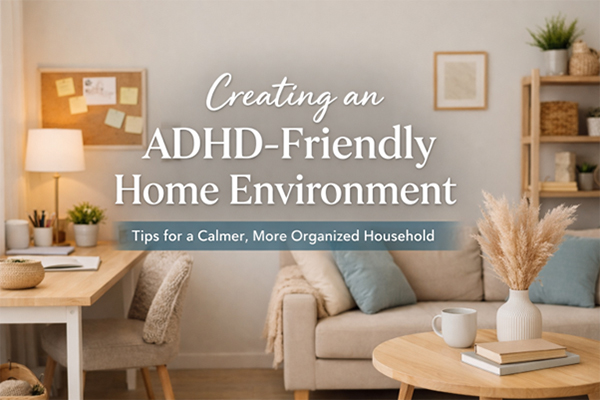
For many adults living with Attention-Deficit/Hyperactivity Disorder (ADHD), home can feel less like a place of rest and more like a constant source of stress. Difficulties with focus, organization, emotional regulation, and time management are not due to a lack of effort or motivation—they are core features of how the ADHD brain functions.
The environment you live in plays a powerful role in how ADHD symptoms show up day to day. With thoughtful adjustments, your home can become a supportive space that reduces overwhelm, improves focus, and supports emotional well-being.
Why the Home Environment Matters for Adult ADHD
ADHD affects executive functioning skills such as planning, prioritizing, task initiation, emotional regulation, and impulse control. When the home environment is cluttered, noisy, or unpredictable, these challenges often intensify.
Adults with ADHD may experience:
- Difficulty starting or completing daily tasks
- Chronic disorganization and forgetfulness
- Emotional overwhelm, irritability, or frustration
- Problems with time management and routines
An ADHD-friendly home environment acts as an external support system, reducing mental load and helping the brain function more effectively.
1. Reduce Visual and Physical Clutter
Clutter can quickly overwhelm the ADHD brain by competing for attention and increasing stress.
Helpful strategies include:
- Decluttering high-use areas such as desks, kitchen counters, and entryways
- Using open storage, bins, and clear labels
- Keeping essential items visible and storing non-essential items out of sight
- Assigning a specific place for frequently used objects
The goal is not perfection, but creating spaces that are easier to navigate and less mentally taxing.
2. Create Clear Zones for Daily Activities
Adults with ADHD benefit from clear environmental cues that signal what type of activity belongs in a space.
Designate specific areas for:
- Work or study
- Relaxation
- Meals
- Sleep
Avoid mixing activities when possible, such as working from bed or eating while distracted by screens. Clear boundaries help the brain transition more smoothly between tasks and improve focus.
3. Make Routines Visible and Predictable
Routines reduce decision fatigue and support executive functioning.
ADHD-friendly tools may include:
- Whiteboards or planners placed in visible locations
- Daily and weekly task lists
- Timers and alarms for reminders and transitions
- Simple, repeatable morning and evening routines
Breaking tasks into smaller, clearly defined steps makes them more manageable and less overwhelming.
4. Optimize Sensory Input
Many adults with ADHD are sensitive to sensory stimulation, including noise, lighting, and visual clutter.
Consider:
- Soft or natural lighting instead of harsh overhead lights
- Noise-canceling headphones or white noise
- Calm, neutral color palettes
- A quiet area for emotional regulation or decompression
Managing sensory input can significantly improve focus, mood, and emotional regulation.
5. Support Executive Function With Simple Systems
Rather than relying on memory or willpower, external systems help compensate for executive functioning challenges.
Helpful systems include:
- Hooks near the door for keys, bags, and jackets
- A shared or digital calendar in a visible location
- Weekly reset routines for organizing and planning
- Color-coded systems for paperwork or responsibilities
The most effective systems are simple, realistic, and easy to maintain.
6. Create Emotional Safety at Home
An ADHD-friendly home is not just organized—it is emotionally supportive.
Many adults with ADHD have experienced years of criticism or self-blame. A supportive environment focuses on:
- Self-compassion rather than perfection
- Flexibility instead of rigid expectations
- Viewing emotional overwhelm as a signal, not a failure
- Celebrating effort and progress
Emotional safety is essential for long-term ADHD management and overall mental health.
7. Adjust Expectations and Start Small
No home will be perfectly ADHD-friendly at all times—and that’s okay. Sustainable change happens gradually.
Start with:
- One room
- One routine
- One system
Small, consistent improvements are far more effective than attempting a complete overhaul.
When to Seek Professional Support
If ADHD symptoms continue to interfere with work performance, relationships, emotional well-being, or daily functioning, professional support can make a meaningful difference.
An adult psychiatrist in Boca Raton can provide a comprehensive evaluation, confirm an ADHD diagnosis, and develop a personalized treatment plan. Treatment may include medication management, behavioral strategies, lifestyle guidance, and support for creating environments that reduce ADHD-related challenges.
Frequently Asked Questions (FAQs)
How does an adult psychiatrist in Boca Raton help with ADHD?
An adult psychiatrist evaluates symptoms, rules out other mental health conditions, and creates an individualized treatment plan. This may include medication management, behavioral strategies, and guidance on improving focus and emotional regulation.
Can adult ADHD be managed without medication?
Some adults benefit from non-medication strategies such as structured routines, behavioral interventions, and environmental modifications. However, medication can be highly effective for many individuals. A psychiatrist can help determine the most appropriate approach.
What are common symptoms of adult ADHD?
Common symptoms include difficulty focusing, disorganization, chronic procrastination, forgetfulness, emotional sensitivity, restlessness, and poor time management.
Is it possible to be diagnosed with ADHD as an adult?
Yes. Many adults were not diagnosed in childhood and only recognize symptoms later in life. A comprehensive psychiatric evaluation can provide clarity and direction for treatment.
Does the home environment really affect ADHD symptoms?
Yes. A cluttered or overstimulating environment can worsen ADHD symptoms, while a structured, supportive home can improve focus, emotional regulation, and daily functioning.
About Dr. Priti Kothari
Dr. Priti Kothari is a trusted adult psychiatrist in Boca Raton, specializing in the diagnosis and treatment of ADHD in adults. She takes a compassionate, patient-centered approach, recognizing that ADHD affects each individual differently.
Dr. Kothari develops evidence-based, personalized treatment plans that may include medication management, behavioral strategies, and lifestyle recommendations. She works collaboratively with patients to help them build structure, confidence, and long-term skills for managing ADHD effectively.
Her goal is not only symptom relief, but empowering adults with ADHD to improve their quality of life and emotional well-being.
Medical References
- American Psychiatric Association. (2022). Attention-Deficit/Hyperactivity Disorder (ADHD).
https://www.psychiatry.org/patients-families/adhd - Centers for Disease Control and Prevention (CDC). ADHD in Adults.
https://www.cdc.gov/adhd/adults/index.html - Barkley, R. A. (2015). Attention-Deficit Hyperactivity Disorder: A Handbook for Diagnosis and Treatment. Guilford Press.
- National Institute of Mental Health (NIMH). Attention-Deficit/Hyperactivity Disorder.
https://www.nimh.nih.gov/health/topics/attention-deficit-hyperactivity-disorder-adhd - Kooij, J. J. S., et al. (2019). European consensus statement on diagnosis and treatment of adult ADHD.
European Psychiatry, 56, 14–34.
https://doi.org/10.1016/j.eurpsy.2018.11.001