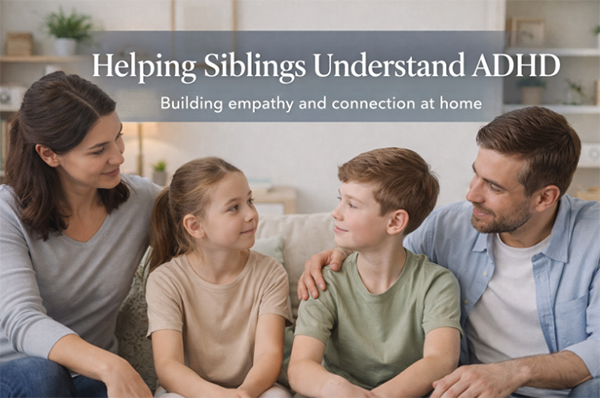
When one child in a family has Attention-Deficit/Hyperactivity Disorder (ADHD), siblings often notice that things feel different but they may not fully understand why. Extra attention, different rules, emotional outbursts, or accommodations can sometimes lead to confusion, resentment, or feelings of being overlooked.
Helping siblings understand ADHD is essential for building empathy, reducing conflict, and fostering healthy family relationships. With open communication and age-appropriate guidance, families can create a supportive environment where every child feels seen and valued.
Why Sibling Understanding Matters
ADHD is a neurodevelopmental condition that affects attention, impulse control, emotional regulation, and executive functioning. These challenges are not always visible, which can make them difficult for siblings to understand.
Without explanation, siblings may think:
- “They’re getting special treatment.”
- “Why don’t they just behave?”
- “Why do the rules seem different?”
These misunderstandings can lead to sibling rivalry, frustration, and emotional distance. Education and reassurance help siblings recognize that ADHD is not about favoritism it’s about different needs.
Explain ADHD in an Age-Appropriate Way
Children understand best when explanations match their developmental level.
For younger siblings:
- Use simple language: “ADHD makes it harder to sit still or pay attention.”
- Compare it to needing glasses to see clearly—some brains need extra help.
For older children and teens:
- Explain how ADHD affects the brain’s ability to regulate attention, emotions, and impulses.
- Encourage questions and honest conversations.
Clear explanations reduce confusion and build compassion.
Encourage Open Conversations and Feelings
Siblings may feel guilty expressing frustration, but their feelings are valid.
Create space for:
- Asking questions
- Expressing emotions without judgment
- Talking about how ADHD affects family routines
Let siblings know it’s okay to feel upset at times—and that their needs matter too.
Avoid Comparisons and Labels
Comparing siblings can unintentionally reinforce resentment.
Avoid statements like:
- “Why can’t you be more like your brother?”
- “You know your sister can’t help it.”
Instead:
- Focus on individual strengths
- Praise effort and cooperation
- Reinforce that every child is different, not better or worse
This helps prevent long-term emotional harm.
Involve Siblings in Supportive Ways
When appropriate, siblings can be part of the support system—without becoming caretakers.
Examples include:
- Helping with visual schedules
- Practicing calming strategies together
- Participating in family routines
This builds teamwork and understanding while maintaining healthy boundaries.
Make Time for Each Child
One of the most common sibling concerns is feeling overlooked.
Even small moments of individual attention—such as one-on-one time with a parent—can make a big difference. When siblings feel secure and valued, resentment tends to decrease.
Model Empathy and Respect
Children learn how to respond to ADHD by watching adults.
Model:
- Calm responses to emotional outbursts
- Respectful language
- Patience and problem-solving
When parents lead with empathy, siblings often follow.
When to Seek Professional Support
If sibling conflict becomes intense, persistent, or emotionally distressing, professional guidance can help.
An adult psychiatrist in Boca Raton or child-focused mental health professional can support families by:
- Explaining ADHD in family-friendly ways
- Addressing sibling resentment or anxiety
- Offering communication strategies
- Supporting emotional regulation across the household
Early support strengthens family bonds and emotional well-being.
Frequently Asked Questions (FAQs)
Why do siblings sometimes feel resentful toward a child with ADHD?
Siblings may feel that the child with ADHD receives more attention or different rules. Without explanation, this can feel unfair. Education and reassurance help reduce resentment.
How can parents explain ADHD to siblings?
Using age-appropriate language, simple examples, and open discussions helps siblings understand that ADHD is a brain-based condition—not bad behavior.
Should siblings be involved in ADHD management?
Siblings can be included in supportive ways, but they should never feel responsible for managing ADHD-related behaviors. Balance and boundaries are important.
Can sibling relationships improve with better understanding?
Yes. When siblings understand ADHD and feel emotionally supported, empathy increases and relationships often improve significantly.
About Dr. Priti Kothari
Dr. Priti Kothari is a compassionate adult psychiatrist in Boca Raton with extensive experience supporting individuals and families affected by ADHD. She understands that ADHD impacts not only the individual, but the entire family system.
Dr. Kothari provides evidence-based psychiatric care and guidance to help families navigate ADHD-related challenges, improve communication, and foster emotional understanding. Her patient-centered approach emphasizes empathy, education, and long-term well-being for every family member.
References
- American Psychiatric Association. ADHD Overview.
https://www.psychiatry.org/patients-families/adhd - Centers for Disease Control and Prevention (CDC). ADHD and Family Life.
https://www.cdc.gov/adhd/family-life/index.html - National Institute of Mental Health (NIMH). ADHD in Children and Teens.
https://www.nimh.nih.gov/health/topics/attention-deficit-hyperactivity-disorder-adhd