
The world glows with warm lights and cheerful melodies, yet some hearts beat quietly beneath the noise. Winter winds rattle the windows, and the sky hangs heavy with unspoken emotions. While families gather and laughter spills from crowded rooms, many sit in the stillness of solitude - holding onto memories, missing faces that once filled the space, or longing for connection that never arrives.
When Silence Echoes Through the Season
The holidays ask us to sparkle, to celebrate, to smile. But not every soul is rejoicing. Some are navigating grief wrapped in tinsel, or wandering through memories like snowflakes that melt before they can be held. Loneliness settles gently, but deeply — an invisible weight carried through the cold.
Yet even in the quietest winter, the heart learns resilience. It is here, in the soft hush of stillness, that strength begins to grow.
What Is Loneliness?
Loneliness is more than simply being alone; it is the feeling of being disconnected, misunderstood, or unseen. It can arise even in crowded rooms or within families that appear close from the outside. Loneliness is subjective—what feels lonely for one person may feel peaceful for another. At its core, loneliness is the absence of meaningful, fulfilling connection.
During holidays, societal pressures emphasize belonging, love, and reunion. Everywhere we look - from social media to movies to advertisements—we are reminded of smiling faces, shared meals, and togetherness. For those who lack that sense of connection, these images create a painful reminder of what is missing.

Why Holidays Can Increase Loneliness
The holiday season can amplify loneliness for many reasons:
- Distance from Loved Ones
People who live far from family or friends may not have the financial means or ability to travel. Time zones, work commitments, and life changes add to this separation, leaving many to spend holidays alone.
- Grief and Loss
Holidays often highlight the absence of those who have passed away or relationships that have ended. What once brought joy may now bring sadness and longing.
- Social Pressure and Expectations
The pressure to feel happy can make loneliness feel like failure. When everyone else seems joyful, emotional pain feels more visible and isolating.
- Changes in Relationships
Divorce, breakups, and estrangement can transform what used to be a season of warmth into one of emotional coldness.
- Mental Health Challenges
Depression, anxiety, and seasonal affective disorder may worsen during the winter and holiday months, impacting motivation and emotional stability.
The Emotional Impact of Holiday Loneliness
Loneliness can affect more than just emotions—it impacts body and mind. It can lead to fatigue, sleep disruptions, weakened immunity, and difficulties with concentration. Emotionally, it may trigger sadness, low self‑esteem, hopelessness, and heightened sensitivity to rejection.
For some, loneliness becomes a cycle: withdrawing socially increases isolation, and greater isolation deepens emotional pain.
Yet, it’s important to remember: feeling lonely does not mean something is wrong with you. Loneliness is part of the human experience, and with support and awareness, it can be navigated.
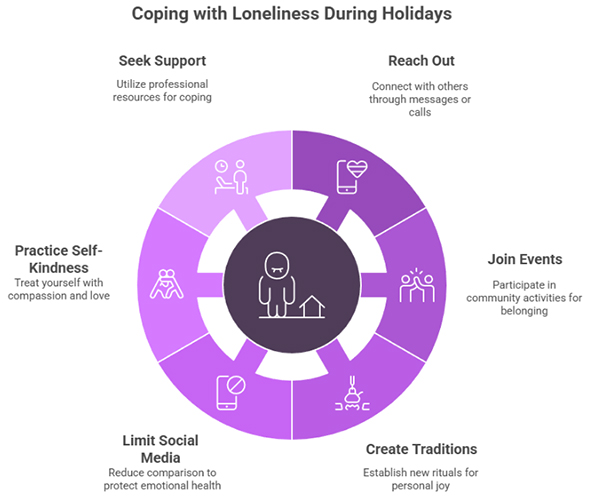
How to Cope With Loneliness During the Holidays
- Reach Out to Someone
A short message, a call, or a video chat can bridge emotional distance. Many people are waiting for connection—they just don’t know where to start.
- Join Community Events
Volunteering, attending local gatherings, or joining virtual holiday activities can bring a sense of belonging and purpose.
- Create Your Own Traditions
Instead of focusing on what’s missing, build new rituals—cook your favorite meal, watch a movie you love, or take a peaceful walk.
- Limit Social Media
Social feeds rarely show reality. Reducing comparison can protect emotional well‑being.
- Practice Self‑Kindness
Treat yourself the way you would treat a struggling friend—with compassion, patience, and love.
- Seek Professional Support
Therapists, support groups, or helplines offer valuable tools for coping and healing.
A Message of Hope
Loneliness does not last forever. Feelings shift, circumstances change, new connections form. Even if today feels heavy, tomorrow can bring light in the most unexpected ways. The holidays are not only about celebration—they can also be a time of reflection, growth, and self‑discovery. You are not alone in your loneliness. Many others share the same quiet struggle, even if you cannot see it.
The holiday season can be painful, but it can also be an opportunity for healing. By acknowledging loneliness, seeking connection in any form, and practicing self‑care, it becomes possible to move through the season with resilience and hope. Whether you spend the holidays surrounded by friends or quietly on your own, remember: peace and joy are not defined by crowds, but by the love you give and receive—starting with yourself.
If this season feels lonely, take a breath and know you are not forgotten. Brighter days are coming.
Refferences
- https://batonrougeclinic.com/news-education/how-to-manage-loneliness-during-the-holidays/
- https://equal-eyes.org/database/2017/12/31/18-heartbreakingly-real-confessions-about-holiday-loneliness
- https://recoverycentersofamerica.com/blogs/dealing-with-loneliness-and-isolation-during-the-holidays/
- https://stenzelclinical.com/top-10-ways-to-cope-with-loneliness/