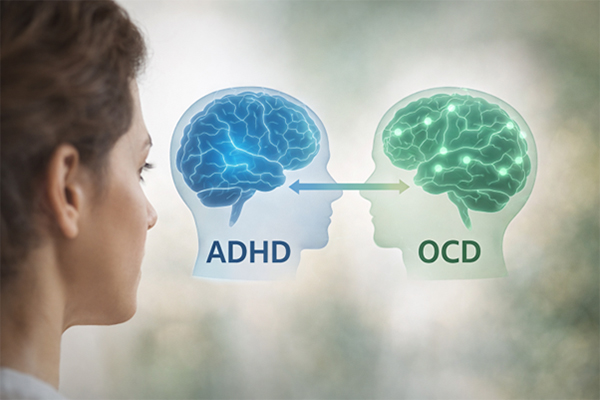
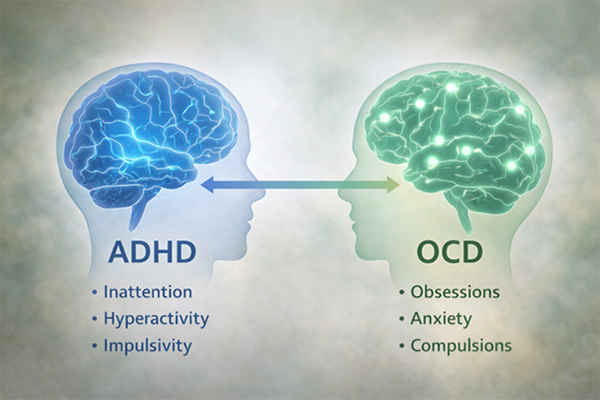
Attention-Deficit/Hyperactivity Disorder (ADHD) and Obsessive-Compulsive Disorder (OCD) are two very different neuropsychiatric conditions, yet they can occur together - creating a unique and often confusing clinical picture for patients and clinicians alike. While ADHD is typically characterized by inattention, impulsivity, and distractibility, OCD involves persistent intrusive thoughts and compulsive behaviors meant to neutralize anxiety. When both present simultaneously, symptoms can overlap, amplify, and complicate diagnosis and treatment.
Understanding this complex interaction is vital for proper treatment - especially when managing symptoms effectively and improving overall quality of life.
What Happens When ADHD and OCD Co-Occur?
Although ADHD and OCD were once thought to be completely separate diagnoses, research has shown that they can co-exist in some individuals. Studies suggest that a significant proportion of people with one disorder may also meet criteria for the other - with estimates ranging broadly depending on clinical samples and diagnostic criteria.
Shared neurobiological mechanisms help explain this overlap. Both conditions involve dysregulation in brain circuits responsible for executive functions such as attention, cognitive control, and planning. However, the way these circuits malfunction differs between the two: ADHD is often associated with hypoactivity (underactivity), while OCD tends to show hyperactivity (overactivity) in similar pathways.
Similarities & Differences Between ADHD and OCD
Symptom Overlaps
Although ADHD and OCD look different on the surface, they can share features that make diagnosis tricky:
- Difficulty focusing: In ADHD, poor focus stems from distractibility; in OCD, intrusive thoughts can monopolize attention.
- Executive function challenges: Planning, organizing, and following tasks through can be hard for both conditions.
- Behavioral rigidity: Perfectionism and repetitive actions can appear in both, though driven by different underlying processes.
Core Differences
- ADHD: Marked by inattention, impulsivity, restlessness, and difficulty sustaining tasks.
- OCD: Characterized by anxiety-provoking obsessions and compulsions performed to alleviate intense fear.
These differing causes and behaviors mean that what looks like a single pattern may actually be two distinct processes happening at once. Accurate evaluation from a trained clinician, like a Boca Raton psychiatrist, is essential for correct diagnosis and treatment planning.
Why Dual Diagnosis Matters
A dual diagnosis of ADHD and OCD isn't just about labeling; it significantly influences treatment decisions. Some medications that help one condition might not benefit - or can even worsen - the other if not carefully managed.
For example:
- Stimulant medications used for ADHD may increase anxiety in some patients with OCD.
- Standard OCD treatments like certain anti-anxiety medications may not adequately address attentional difficulties.
That's why a nuanced approach combining medication, psychotherapy, and behavioral strategies is often needed - tailored individually by a specialist psychiatrist.
Treatment Strategies When ADHD and OCD Co-Exist
A comprehensive treatment plan for co-occurring ADHD and OCD typically includes:
- Medication management tailored to both conditions
- Cognitive-Behavioral Therapy (CBT) with an emphasis on both executive functioning and anxiety reduction
- Exposure and Response Prevention (ERP) for OCD compulsions
- Behavioral interventions addressing impulsivity and time management
- Regular follow-up and adjustment of care strategies based on response
A collaborative, personalized approach helps ensure that both conditions are treated effectively and safely.
FAQs About ADHD and OCD
1. Can someone really have both ADHD and OCD at the same time?
Yes - while ADHD and OCD are distinct disorders, they can co-occur. Some studies suggest that individuals with one condition may have a higher likelihood of also meeting criteria for the other, although the precise rates vary.
2. Why does co-occurrence make diagnosis harder?
Many symptoms - like difficulty focusing, perfectionistic behaviors, or repetitive actions - can appear similar even though they stem from different causes, leading to potential misdiagnosis if not carefully evaluated.
3. Is treatment different when ADHD and OCD occur together?
Yes. Effective management often requires specialized medication planning and therapy that addresses both attention challenges and compulsive anxiety-driven behaviors.
4. Can therapy alone help?
Therapy, especially CBT and ERP, can be highly effective for both ADHD and OCD components, but combined therapy and medication often achieve the best outcomes. A Boca Raton psychiatrist with expertise in both conditions can guide the right mix.
5. Should children with one diagnosis be evaluated for the other?
Because symptoms can overlap and influence development, children diagnosed with either ADHD or OCD may benefit from a comprehensive assessment to rule out or identify additional challenges early on.
Final Thoughts
Living with ADHD and OCD simultaneously can be confusing and frustrating, but with proper evaluation and treatment, individuals can achieve meaningful improvements in attention, anxiety regulation, and daily functioning. A thoughtful, personalized approach - ideally with guidance from an experienced psychiatrist like Dr. Priti Kothari in Boca Raton - can help patients navigate these complex conditions and live with greater balance and clarity.
References
1. International OCD Foundation (IOCDF)
OCD and ADHD: Dual Diagnosis and Misdiagnosis
https://iocdf.org/expert-opinions/expert-opinion-ocd-and-adhd-dual-diagnosis-misdiagnosis-and-the-cognitive-cost-of-obsessions/
2. National Institute of Mental Health (NIMH)
Attention-Deficit/Hyperactivity Disorder in Adults
https://www.nimh.nih.gov/health/topics/attention-deficit-hyperactivity-disorder-adhd
3. National Institute of Mental Health (NIMH)
Obsessive-Compulsive Disorder
https://www.nimh.nih.gov/health/topics/obsessive-compulsive-disorder-ocd
4. Journal of Attention Disorders
Abramovitch et al., Co-occurrence of ADHD and OCD: Clinical Implications
https://journals.sagepub.com/doi/10.1177/1087054714538665
5. ADDitude Magazine (Medically Reviewed)
ADHD and OCD: Similarities, Differences, and Treatment
https://www.additudemag.com/ocd-adhd-symptoms-diagnosis-treatment/
6. American Psychiatric Association (APA)
What Are Obsessive-Compulsive and Related Disorders?
https://www.psychiatry.org/patients-families/obsessive-compulsive-disorder/what-is-obsessive-compulsive-disorder