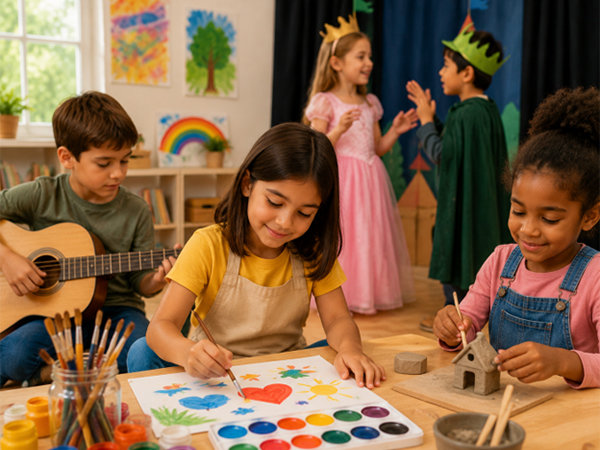
Creative activities play an important role in children’s emotional, social, and cognitive development. Through experiences such as art, music, theater, and other forms of self-expression, children have opportunities to explore their feelings, build confidence, develop communication skills, and discover their strengths. For children with ADHD, anxiety, or challenges with emotional regulation, creative activities can provide supportive environments where they can practice important skills while engaging in activities they enjoy.
Children may express thoughts and emotions through creative activities in ways they may not always communicate through words. Creating artwork, playing music, performing, or participating in imaginative activities can help children understand themselves, connect with others, and develop confidence. These experiences are not only enjoyable but can also support important developmental skills.
What Does This Mean?
Creative arts include activities that encourage imagination, self-expression, and exploration, such as drawing, painting, music, dance, drama, storytelling, and theater. These activities allow children to experiment, make choices, solve problems, and communicate ideas in different ways.
For children with ADHD, creative activities can provide opportunities to strengthen attention, patience, emotional awareness, and executive functioning skills. The goal is not perfection or performance but providing children with meaningful ways to explore their abilities and experience success.
Common Ways Creative Arts Support Children’s Development
Encouraging Emotional Expression
Children may sometimes struggle to explain complex emotions through conversation. Creative activities can provide another way for them to express feelings, experiences, and ideas.
For example, a child may use drawing to represent emotions, music to express moods, or storytelling to explore different experiences. These activities can help children become more aware of their feelings and develop healthier ways to communicate.
Building Confidence and Self-Esteem
Creative activities allow children to develop skills and see their progress over time. Completing a drawing, learning a song, performing a scene, or creating a project can provide a sense of accomplishment.
For children who may experience challenges in academic or social settings, success in creative activities can help them recognize their strengths and build a more positive sense of self.
Supporting Attention and Focus
Many creative activities require children to concentrate, follow steps, remember information, and complete projects. Practicing these skills in an enjoyable setting can support attention development.
For example, learning an instrument requires listening, repetition, and practice. Theater requires remembering lines, following sequences, and staying engaged with others. Art projects often involve planning and completing multiple steps.
Developing Executive Functioning Skills
Creative activities often involve skills connected to executive functioning, including planning, organization, flexibility, and self-monitoring.
Examples include:
- A child creating artwork may need to plan materials and decide how to complete a project.
- A child participating in theater may need to remember lines, follow a schedule, and adjust during performances.
- A child learning music may need to practice consistently and monitor improvement.
These experiences provide opportunities to strengthen important life skills in meaningful ways.
Improving Social and Communication Skills
Group creative activities can help children practice cooperation, listening, teamwork, and communication.
Theater, music groups, art classes, and creative clubs provide opportunities for children to work with others, accept feedback, share ideas, and develop a sense of belonging.
Encouraging Flexibility and Problem-Solving
Creative activities often involve making decisions, trying new approaches, and learning from mistakes. Children learn that there may be multiple ways to complete a project or solve a challenge.
This can support flexible thinking and help children become more comfortable with experimentation and change.
How This Affects Daily Life
Participation in creative activities can support children by promoting:
- Increased confidence and self-awareness
- Improved emotional expression
- Stronger communication skills
- Better focus and persistence
- Greater creativity and problem-solving abilities
- Increased opportunities for social connection
- A stronger sense of personal achievement
When children have opportunities to explore their interests, they can develop a more balanced understanding of their abilities beyond academic performance.
Strategies and Support Options
Follow the Child’s Interests:
Children are more likely to stay engaged when they participate in activities they genuinely enjoy. Allowing children to explore different forms of creativity can help them discover activities that match their strengths.
Focus on Growth, Not Perfection:
Creative activities should be opportunities for exploration rather than pressure to achieve a specific outcome. Praising effort, practice, and improvement helps children develop confidence.
Create Regular Opportunities for Creativity:
Consistent access to creative activities allows children to build skills over time. Simple activities at home, school programs, or community classes can provide valuable experiences.
Encourage Self-Expression:
Give children opportunities to share their ideas, feelings, and perspectives through creative outlets. Listening and showing interest can reinforce their confidence and sense of value.
Support Social Connections Through Activities:
Group activities such as theater, music ensembles, or art classes can help children develop friendships and practice communication skills in supportive environments.
Combine Creative Activities With Other Supports:
Creative activities can complement evidence-based supports such as therapy, behavioral strategies, educational accommodations, and medical treatment when recommended by qualified healthcare providers.
Seek Professional Support When Needed:
If emotional, behavioral, or developmental challenges significantly affect a child’s daily life, relationships, or learning, mental health professionals can provide individualized guidance and support.
In Conclusion
Creative arts provide children with valuable opportunities to express themselves, build confidence, develop skills, and connect with others. Activities such as art, music, and theater can support emotional growth while encouraging attention, creativity, problem-solving, and resilience.
For children with ADHD or other emotional challenges, creative experiences can become meaningful spaces where they recognize their strengths and experience success. By encouraging exploration and providing supportive environments, parents and caregivers can help children develop confidence, emotional awareness, and skills that benefit them throughout childhood and beyond.
About Dr. Priti Kothari
Dr. Priti Kothari is a board-certified child, adolescent, and adult psychiatrist in Boca Raton. She specializes in ADHD, anxiety, executive functioning challenges, and child mental health, helping children and families develop practical strategies for emotional regulation, skill-building, and improved daily functioning.
Frequently Asked Questions
Can creative activities help children with ADHD?
Creative activities can support children with ADHD by providing opportunities to practice focus, self-expression, emotional regulation, and confidence-building. They are a supportive tool and do not replace evidence-based ADHD treatment.
What creative activities are helpful for children?
The best activities depend on the child’s interests. Art, music, theater, dance, writing, and other creative activities can all provide valuable developmental benefits.
Does a child need to be naturally talented to benefit from creative activities?
No. The benefits come from participation, exploration, and practice rather than performance ability. Creative activities are valuable learning experiences for all children.
How can parents encourage creativity at home?
Parents can provide access to creative materials, encourage exploration, celebrate effort, and allow children opportunities to share their ideas without focusing only on the final result.