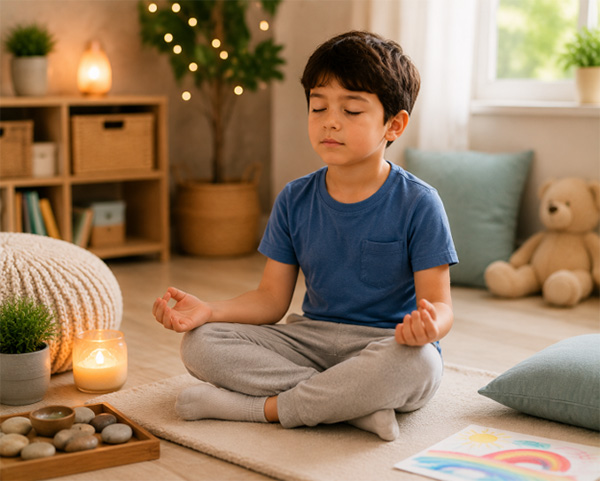
Children experience many emotions, thoughts, and challenges as they grow and develop. Learning how to pay attention, manage emotions, and respond to stressful situations are important skills that support mental health and daily functioning. Mindfulness practices can provide children with simple tools to improve awareness, emotional regulation, and focus. When introduced in an age-appropriate way, mindfulness can help children develop healthier ways to understand their thoughts and feelings.
For children with ADHD, anxiety, or challenges with emotional regulation, mindfulness may provide additional support by encouraging attention control, self-awareness, and calming strategies. While mindfulness does not replace evidence-based treatments, it can be a helpful addition to broader mental health and developmental support.
What Does This Mean?
Mindfulness involves paying attention to the present moment with curiosity and without judgment. For children, mindfulness does not require long periods of meditation or complex techniques. It can include simple activities such as noticing breathing, paying attention to sounds, practicing gratitude, observing emotions, or focusing on one activity at a time. These practices help children become more aware of their thoughts, feelings, and surroundings, which can support emotional balance and better responses to everyday challenges.
Common Ways Mindfulness Supports Children's Mental Health
Improving Attention and Focus
Mindfulness encourages children to practice staying present and directing their attention intentionally. This can be helpful for children who become easily distracted or have difficulty staying engaged with tasks.
Simple activities, such as focusing on breathing, listening carefully to sounds, or completing a mindful activity, can help children practice returning their attention when their mind wanders.
Supporting Emotional Regulation
Children often experience strong emotions but may not always know how to manage them. Mindfulness helps children notice emotions without immediately reacting.
By learning to identify feelings such as frustration, worry, or anger, children can begin developing strategies to pause, reflect, and choose healthier responses.
Reducing Stress and Anxiety
Mindfulness can help children develop calming skills that support stress management. When children learn simple relaxation techniques, they may feel more prepared to handle challenging situations.
Practices such as slow breathing, guided imagery, or mindful movement can provide children with tools they can use when they feel overwhelmed.
Building Self-Awareness
Understanding thoughts, emotions, and behaviors is an important part of emotional development. Mindfulness encourages children to notice patterns in how they respond to different situations.
Greater self-awareness can help children recognize what strategies help them feel calm, focused, and confident.
Encouraging Patience and Self-Control
Mindfulness teaches children that thoughts and emotions can be noticed without immediately acting on them. This skill can support impulse control and decision-making.
For children who struggle with reacting quickly, mindfulness practices may provide opportunities to practice slowing down and considering different choices.
How This Affects Daily Life
Mindfulness practices can support children by promoting:
- Improved attention and concentration
- Greater awareness of emotions
- Better stress management skills
- Increased ability to pause before reacting
- Stronger coping strategies during challenges
- Improved confidence in managing feelings
When children develop awareness of their thoughts and emotions, they become better equipped to handle everyday experiences at home, school, and in social settings.
Strategies and Support Options
Start With Short, Simple Practices:
Children often respond best to brief and engaging activities. A few minutes of mindful breathing, stretching, or quiet observation can be a helpful starting point.
Practice Mindfulness During Everyday Activities:
Mindfulness does not need to be a separate activity. Children can practice awareness while eating, walking, drawing, listening to music, or spending time outdoors.
Use Child-Friendly Techniques:
Activities such as breathing exercises, guided stories, gratitude exercises, and mindful movement can make mindfulness more engaging and accessible.
Create a Calm Environment:
A supportive environment helps children feel comfortable exploring emotions. Parents and caregivers can model calm responses and encourage open conversations about feelings.
Practice Consistently:
Like any skill, mindfulness improves with regular practice. Consistency helps children become more familiar with using these techniques during stressful moments.
Combine Mindfulness With Other Supports:
Mindfulness can complement evidence-based approaches such as therapy, behavioral strategies, school support, and medical treatment when recommended by qualified healthcare providers.
Seek Professional Support When Needed:
If a child experiences ongoing difficulties with anxiety, attention, emotional regulation, or daily functioning, mental health professionals can provide individualized guidance and treatment recommendations.
In Conclusion
Mindfulness can be a valuable tool for supporting children’s attention, emotional awareness, and ability to manage stress. Simple practices that encourage children to notice their thoughts, feelings, and surroundings can help build important skills for emotional regulation and resilience.
By introducing mindfulness in a supportive and age-appropriate way, parents and caregivers can help children develop greater self-awareness and confidence. When combined with appropriate mental health support, mindfulness can become a helpful part of a child’s overall emotional and cognitive development.
About Dr. Priti Kothari
Dr. Priti Kothari is a board-certified child, adolescent, and adult psychiatrist in Boca Raton. She specializes in ADHD, anxiety, executive functioning challenges, and child mental health, helping children and families develop practical strategies for emotional regulation, coping skills, and improved daily functioning.
Frequently Asked Questions
Can mindfulness help children with ADHD?
Mindfulness may support children with ADHD by encouraging attention awareness, emotional regulation, and self-control. It should be used as a complement to evidence-based ADHD treatments.
At what age can children start practicing mindfulness?
Children can begin learning simple mindfulness activities at an early age. Practices should be adapted to the child’s developmental level and interests.
Does mindfulness replace therapy or ADHD treatment?
No. Mindfulness is a supportive practice and should not replace professional evaluation, therapy, medication when prescribed, or other recommended treatments.
How can parents introduce mindfulness at home?
Parents can begin with short activities such as mindful breathing, gratitude conversations, quiet observation, or practicing awareness during daily routines.